
B.C.’s $1.46B natural-gas forecasting error is now a public-trust test
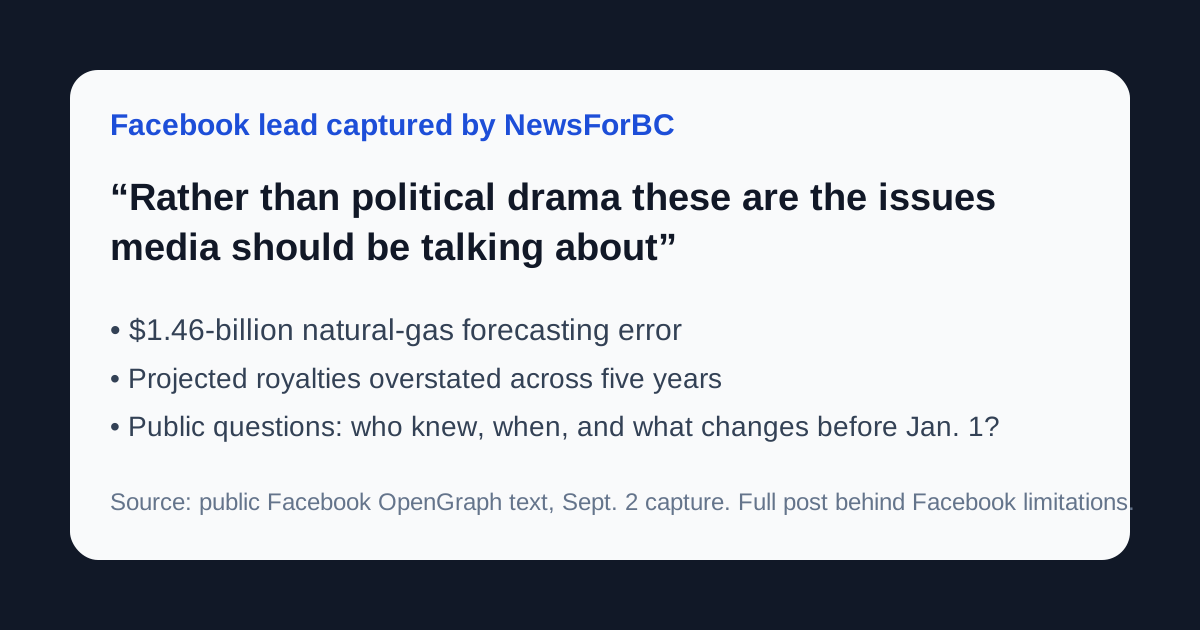
A Facebook post asked why the province’s gas-royalty math was not the main political story. The public record shows why it should be: B.C. officials have now confirmed a five-year revenue overstatement of about $1.46 billion, while First Nations, opposition MLAs and outside experts are asking whether the new royalty framework should proceed before the public sees the corrected math.
The story
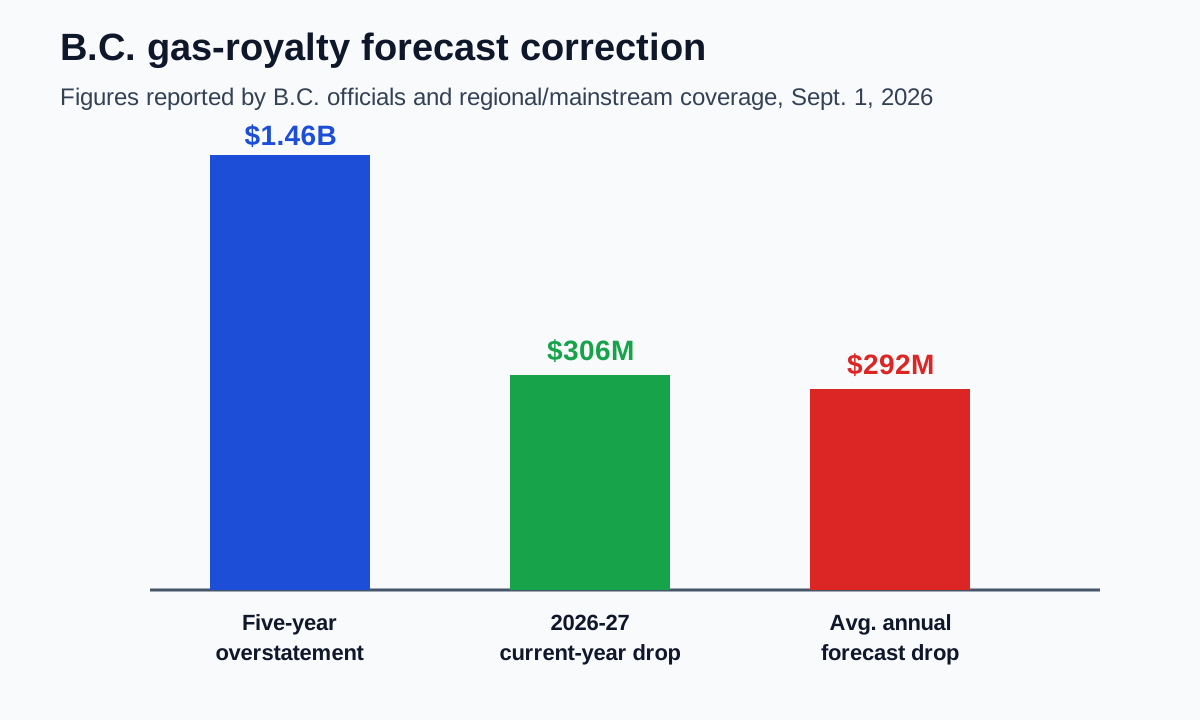
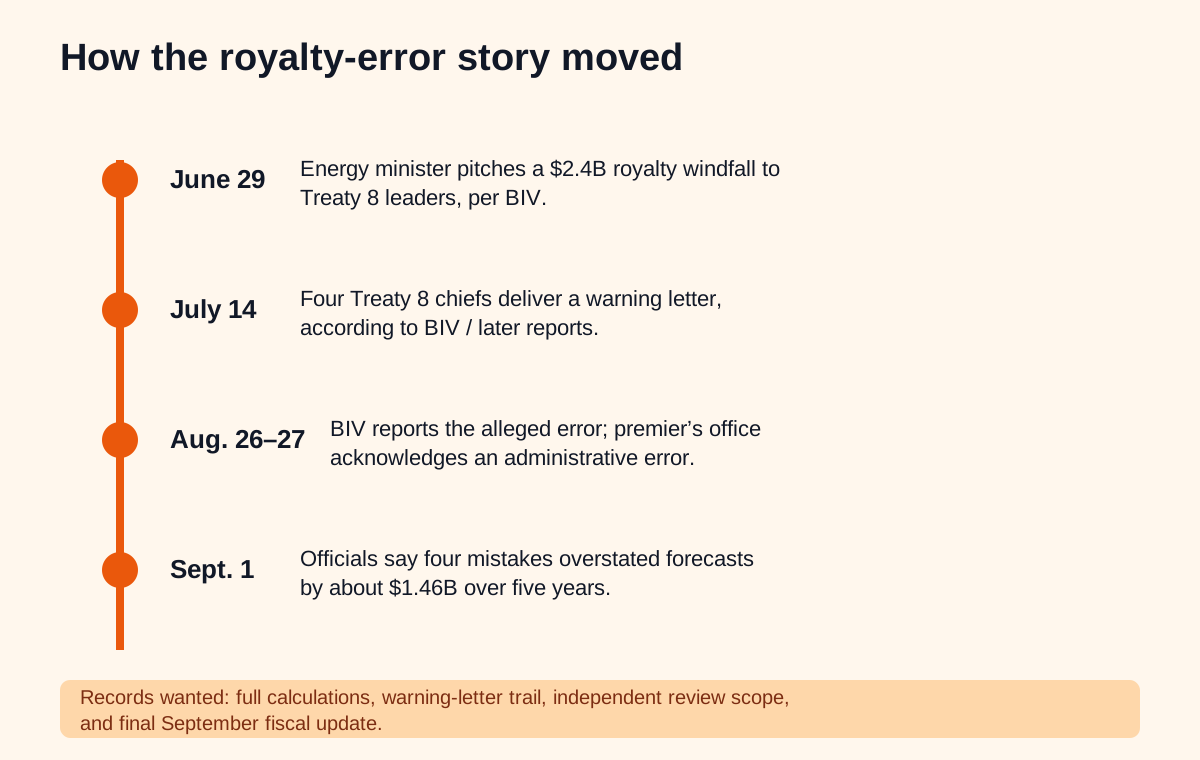
British Columbia’s natural-gas royalty forecast has been cut by about $1.46 billion over five fiscal years after officials identified four administrative errors in the Budget 2026 calculations. The largest, according to reports from the Sept. 1 technical briefing, was a currency-conversion mistake: some gas-price forecasts were treated as if they still needed conversion into Canadian dollars even though they were already in Canadian units.
The correction is not small. The current fiscal-year forecast is reported to fall by about $306 million, from roughly $1.297 billion to about $991 million. Over the following years, the correction averages about $292 million per year.
Why this is more than a spreadsheet story
The timing matters because B.C. is preparing to move into a redesigned natural-gas royalty framework on Jan. 1, 2027. That framework is supposed to capture a fairer share of profits from publicly owned resources after production costs. Energy Minister Adrian Dix previously described a possible $2.4-billion five-year gain from the new framework, according to Business in Vancouver’s reporting on a June 29 meeting with Treaty 8 First Nations.
Treaty 8 leaders and their advisers had already warned the province about what they believed were serious errors in the royalty math. BIV reported that four Treaty 8 chiefs delivered a warning letter to Premier David Eby in July. The government’s current explanation says the confirmed errors were not the same as the transportation-and-processing-cost problem alleged by outside experts and Treaty 8 advisers. That leaves a public gap: the public still has not seen a full reconciliation showing exactly what was wrong, what was corrected, and how the new royalty framework now performs.
What officials say happened
Officials described four human errors, led by the currency-conversion issue. Reports also describe a smaller unit-conversion problem and two data-year mistakes involving 2025 rather than 2026 values in plant inlet and outlet calculations. Energy Minister Adrian Dix called the main issue a serious mistake and said forecasting, by definition, can move with market prices. Officials said corrections would appear in the next quarterly fiscal report.
Premier David Eby has said the province needs accurate, complete budget information that people can trust and has invited review of the matter. The ministry has also said it will add third-party verification to the forecasting process.
What critics want answered
Opposition parties and the B.C. Greens have called for independent review. Green finance critic Rob Botterell asked the auditor general to investigate how the error occurred, its impact on the new framework and the internal decision-making process. B.C. Conservative finance critic Gavin Dew and other opposition voices have focused on the timeline: when officials were warned, what the premier and energy minister knew, and why corrected calculations were not public sooner.
Those are fair public-interest questions even if no one has proven intentional deception. B.C. Budget 2026 was already built around large deficits — including a forecast $13.3-billion shortfall for 2026-27 — and natural-resource revenue is one of the few lines that can change the province’s fiscal room without a new tax or service cut.
Records still needed
- The full July Treaty 8 warning letter and any government replies.
- The corrected gas-price forecast table, including plant-inlet and outlet assumptions.
- A reconciliation between the province’s `unit and currency conversion` explanation and BIV/Olewiler/Treaty 8 concerns about transportation and processing costs.
- The independent economists’ verification scope and terms of reference.
- The updated estimate of whether the Jan. 1, 2027 royalty framework captures the promised share of net profits.
- Any briefing notes to the premier, finance minister and energy minister before the public admission.
NewsForBC view
The most important B.C. story here is not partisan drama. It is budget reliability. If a province can be $1.46 billion wrong on a resource-revenue line while preparing a new royalty system, voters, First Nations, investors and municipalities need a public audit trail before the next framework takes effect.
That audit trail should be practical, not theatrical: publish the corrected tables, release the warning-letter timeline, explain how third-party verification will work, and say plainly whether the new royalty framework still meets the province’s own target.
Sources
- Facebook lead supplied to NewsForBC — public metadata captured; full post access-limited.
- CTV / Canadian Press: B.C. confirms $1.46B in gas revenue forecast errors.
- CBC: B.C. energy ministry says four calculation mistakes led to $1.5B budget error.
- Business in Vancouver: Budget error could cost B.C. billions in gas royalties.
- Business in Vancouver: opposition seek auditor general probe.
- Business in Vancouver: B.C. admits to $1.5B budget error following investigation.
- Abbotsford News / Black Press: spreadsheet-mistake account.
- Vancouver Sun: Conservatives demand probe.
- CityNews Vancouver video summary.
- B.C. Budget 2026 materials, including the Budget and Fiscal Plan and Fiscal Plan backgrounder.

.jpg)