Editorial note: The Facebook post was used as a story lead. Facebook’s full post view was login-gated during capture, so this article relies on CBC, BetaKit, Global News and public clinical-trial records for the verified facts. It is not medical advice and does not treat Neuralink as a routine treatment or cure.
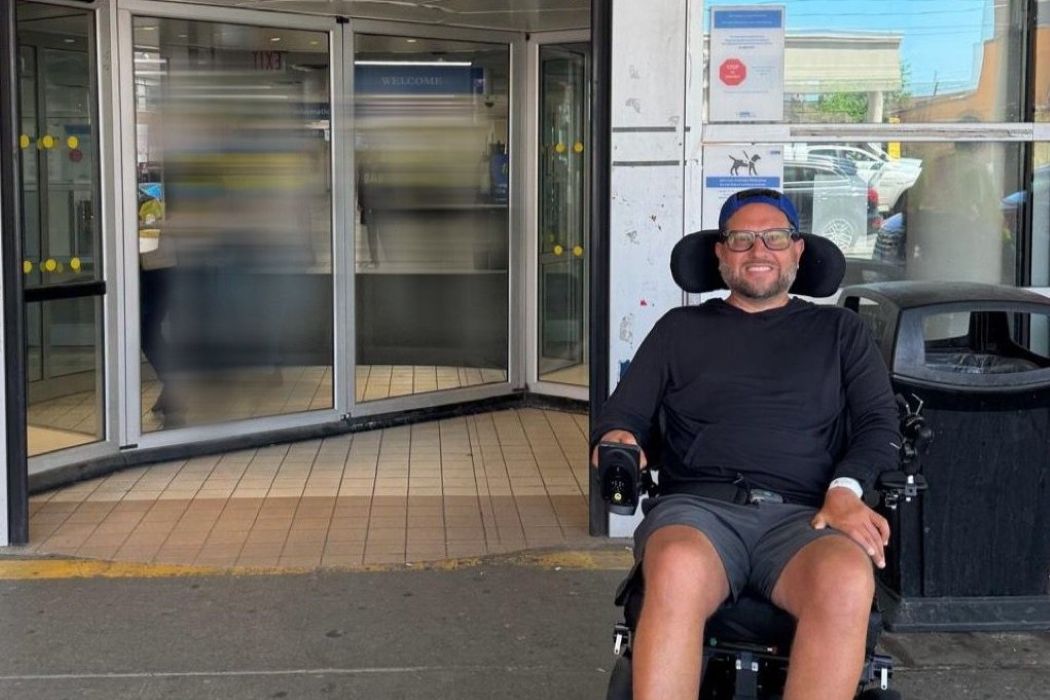
What is confirmed: CBC reports that Vancouver police Sgt. Lee Marten is one of the first Canadians with ALS to receive Elon Musk’s Neuralink brain implant. CBC’s article metadata describes Marten as a VPD sergeant and says he underwent surgery on May 20. BetaKit reports the same story through the health-technology lens, describing him as the first Canadian ALS patient to receive a Neuralink brain implant.
Global News had previously profiled Marten as a Vancouver Police officer speaking publicly about living with ALS. Taken together, the source trail is not just a technology story. It is a B.C. human-interest story about disability, public service, clinical trials and the future of assistive tools for people who are losing movement or communication capacity.
What the technology claim means — and what it does not mean
The central claim is that a brain-computer interface can translate neural signals into computer control. Public descriptions of Neuralink’s implant describe flexible electrode threads placed in the motor cortex, with signals sent to software that can help move a cursor or control digital devices.
That does not mean the technology is broadly available, proven for every patient, or a cure for ALS. The relevant public-trial record, ClinicalTrials.gov NCT06429735, describes an early feasibility study of an implanted brain-computer interface. In plain language: this is experimental medical technology, not ordinary consumer tech.
The B.C. public-interest angle
B.C. readers should care because advanced assistive technology is moving from science fiction into real Canadian operating rooms. If these tools eventually prove safe and useful, governments, hospitals and insurers will face difficult questions: who qualifies, who pays, what supports are needed at home, and how quickly public systems can evaluate new devices without letting hope outrun evidence.
There is also a public-service dimension. Marten’s story comes from a Vancouver Police member who spent years serving the public and then became publicly associated with a high-profile medical-technology trial. That makes the story local, human and policy-relevant without requiring readers to accept every Silicon Valley claim at face value.
Questions worth tracking
- Will Canadian regulators and hospitals publish clear evidence standards for brain-computer interface trials?
- How will B.C. patients with ALS, spinal injuries or other severe mobility loss learn about legitimate trials versus hype?
- If the technology matures, will access depend on wealth, geography, workplace benefits or public coverage?
- What privacy rules govern neural-signal data, device telemetry and software platforms tied to medical implants?
NewsForBC view: Marten’s story is hopeful, but the public conversation should stay disciplined: celebrate courage, verify the science, protect patient privacy and ask whether B.C.’s health system is ready for the next generation of assistive technology.
Source trail
- Facebook lead supplied to NewsForBC — Vancouver Police share metadata captured publicly.
- CBC British Columbia: “Vancouver 'RoboCop' is one of 1st Canadian ALS patients to receive Elon Musk's Neuralink brain implant”.
- BetaKit: “Vancouver Police sergeant becomes first Canadian ALS patient to receive Neuralink brain implant”.
- Global News video: “Vancouver police officer shares his story of living with ALS”.
- ClinicalTrials.gov NCT06429735: PRIME Study — Precise Robotically Implanted Brain-Computer Interface.
- NewsForBC source note.