Editorial note: This brief is based on the CBC British Columbia video supplied to NewsForBC, the retrieved transcript, and general public-health guidance from CDC and Health Canada. NewsForBC did not independently test beach water and this article is not medical advice.
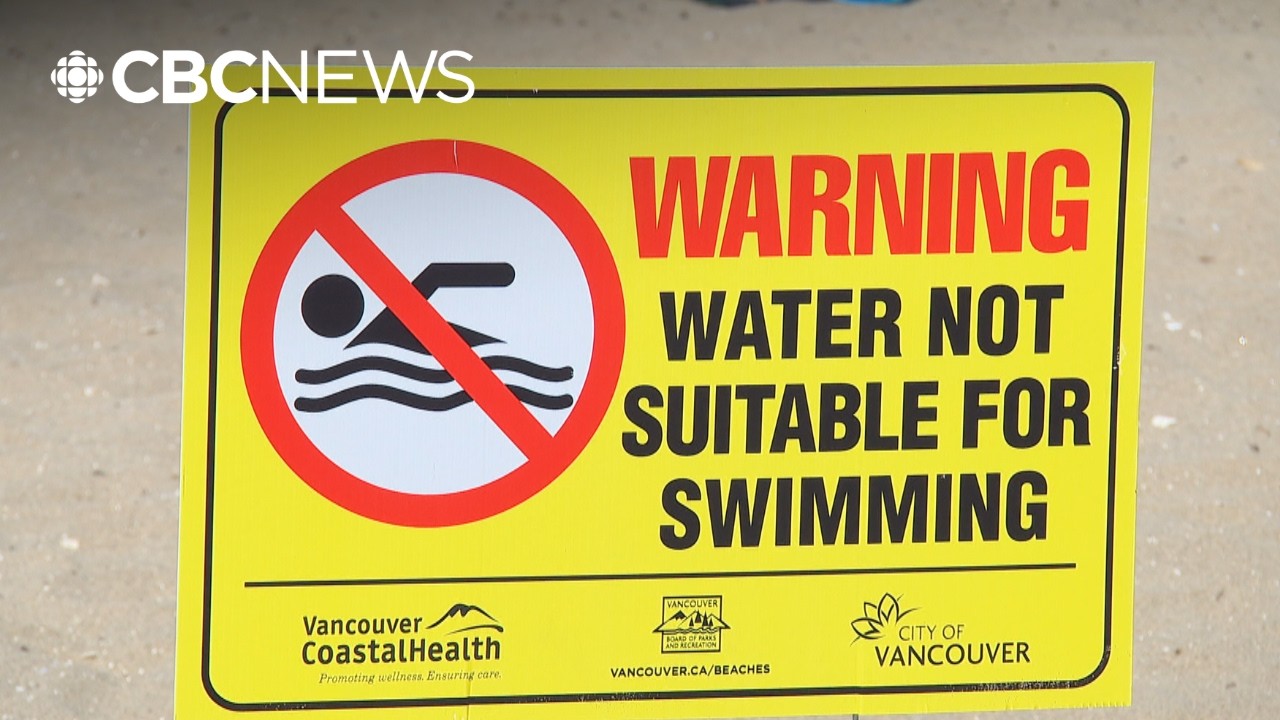
CBC’s video report says Vancouver Coastal Health had advisories in place for English Bay, Sunset Beach, Kits Point, Third Beach and Trout Lake after sampling showed E. coli above limits. The report showed people still using the sand and beach areas while avoiding the water.
What E. coli means at a beach
E. coli readings at beaches are used as a warning sign that fecal contamination may be present. The public-health concern is not only one bacterium: contaminated recreational water can carry germs that affect the gut, ears, eyes, skin and respiratory tract. CDC’s healthy-swimming guidance says people can get swimming-related illnesses by swallowing contaminated water, having contact with it, or breathing in mists from contaminated water.
Health Canada’s recreational-water overview separates primary contact activities — such as swimming, wading, windsurfing and waterskiing, where people may get the whole body and head wet — from lower-risk secondary contact activities such as boating or fishing. That distinction matters when a beach is beautiful enough to visit but water quality is not good enough for swimming.
Possible effects after exposure
In the CBC transcript, a Vancouver Coastal Health medical health officer warned of “very unpleasant symptoms” and possible ear infections, eye infections, throat infection and infection on surfaces that contact the water. CDC’s E. coli symptom page also notes that E. coli illness can involve diarrhea, stomach cramps, vomiting and low fever, depending on the strain.
Anyone who chooses to enter water despite an advisory should at minimum shower thoroughly afterward and wash hands before eating, as the health officer advised in the report. The stronger advice is to follow the posted do-not-swim advisory and keep children, seniors and people with weaker immune systems out of the water until the advisory is lifted.
Sampling disruption does not mean “all clear”
The CBC report also said some beaches had not been sampled properly because of a Metro Vancouver labour dispute. The transcript names Jericho, Spanish Banks, Acadia and both Wreck Beaches as affected by sampling disruption. That does not necessarily mean those beaches are unsafe, but it does mean beach users should check current official postings before swimming rather than assuming no posted result equals safe water.
NewsForBC view
For Vancouver beaches, the practical public-interest issue is communication. A sunny day can make a beach look safe even when water-quality data says otherwise. Advisories need to be easy to find, current and plain-language: which beaches are affected, whether the issue is a single sample or a rolling average, and what beach users should do if they were exposed.
The safest short version: enjoy the beach, avoid the water where a do-not-swim advisory is posted, shower and wash hands after contact, and seek medical advice if symptoms such as persistent diarrhea, vomiting, fever, bloody stool, dehydration, eye/ear infection or worsening illness appear after exposure.
Source trail
- CBC British Columbia YouTube video: “5 Vancouver beaches under E. coli contamination advisories”.
- NewsForBC source note and editorial boundary.
- Retrieved YouTube transcript JSON.
- CDC: Swimming and Your Health.
- CDC: Symptoms of E. coli Infection.
- Health Canada: Recreational water and health overview.