Source check · B.C. misinformation risk · August 22, 2026
Viral “Surrey B.C. Pride” graphic is wrong: Stephen Ireland case is Surrey, England — but the child-sex conviction is real
A viral Instagram Reel and graphic are using a real UK child-sex-abuse conviction to make a Canadian-looking claim. The conviction is real. The “Surrey B.C. Pride Festival” label is not supported by the public record NewsForBC checked.

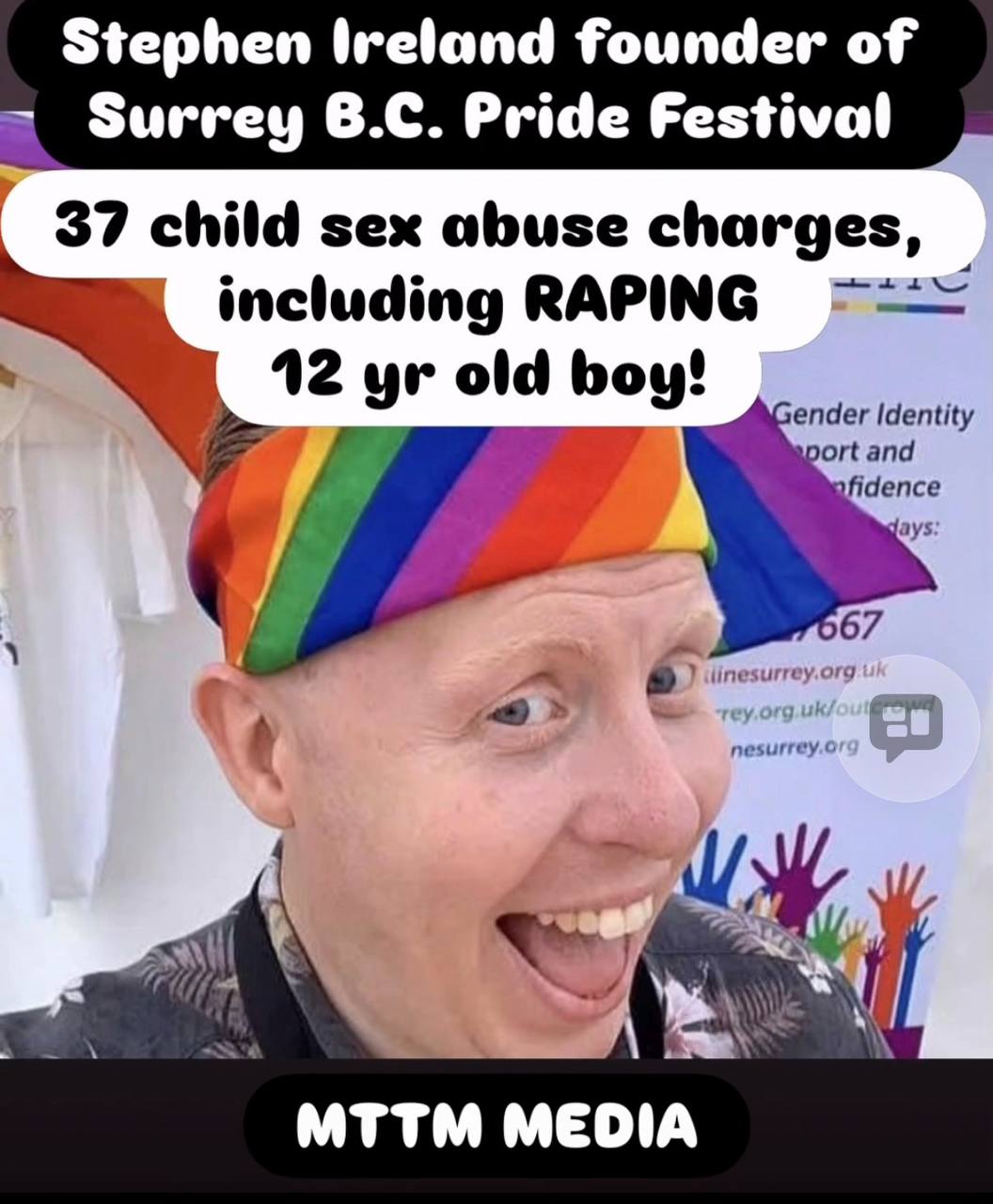
What the viral post says
The submitted graphic says: “Stephen Ireland founder of Surrey B.C. Pride Festival” and “37 child sex abuse charges, including RAPING 12 yr old boy.” The Instagram Reel caption also includes Canada hashtags.
But the image itself contains UK clues. A close inspection shows prideinsurrey.org.uk, “Pride in Surrey,” and the UK title “Police & Crime Commissioner.” The court/source trail points to Addlestone, Guildford Crown Court and Surrey Police — all in Surrey, England.
Preserved source Reel from mttmmedia. Duration: about 28.4 seconds. Metadata title: Video by mttmmedia.
What is true
- BBC reported on March 13, 2025 that Stephen Ireland, 41, co-founder of Pride in Surrey, was convicted of raping a 12-year-old boy he met on Grindr.
- BBC reported Ireland was also found guilty of three counts of causing a child under 13 to engage in sexual activity, one count of sexual assault of a child under 13 and six counts of making indecent images of children.
- BBC reported David Sutton, 27, who volunteered with the organization, was found guilty of three counts of making indecent photographs of children and one count of possession of an extreme pornographic image.
- Guildford Dragon later reported Ireland was sentenced to 24 years in prison, with six more years on extended licence; Sutton was sentenced to four-and-a-half years.
What is wrong or misleading
The viral graphic’s Canadian location label is the problem. NewsForBC found no reliable public-source tie between Stephen Ireland and a Surrey, B.C. Pride Festival. The sources point to Surrey, England. Guildford Dragon says Pride in Surrey events were held in places such as Guildford, Reigate, Godalming and Camberley. BBC’s later coverage placed the 2025 event in Guildford’s Stoke Park.
The “37 charges” wording is also not a clean way to describe the public record. Guildford Dragon reported police authorised 44 offences, later increased to 45, relating to Ireland and Sutton. BBC and Guildford Dragon list a mix of convictions, guilty pleas and acquittals. NewsForBC therefore uses the named convictions and sentences rather than repeating the graphic’s shorthand as if it were the verdict count.
Why this matters in B.C.
Canadians should know about serious safeguarding failures and public-record convictions. But a post that drags a UK case into Canadian feeds with #Canada tags and “Surrey B.C.” wording can mislead B.C. readers about where the offence happened and which organization was involved.
The correction is not that the case is fake. The correction is geographic and evidentiary: real UK conviction, wrong B.C. framing.
Do not turn a criminal case into collective blame
The crimes reported by BBC, Guildford Dragon and police-source statements belong to the convicted individuals. They are not evidence against every Pride attendee, LGBTQ+ person, volunteer or Canadian organization. The legitimate public-interest questions are: how organizations vet people, how safeguarding is audited, how local authorities respond after arrests/convictions, and how viral posts should correct location and count claims.
Claim table
| Claim | Status |
|---|---|
| Stephen Ireland was convicted of raping a 12-year-old boy. | Supported by BBC and Guildford Dragon. |
| Ireland founded/co-founded Pride in Surrey. | Supported in UK reporting, with founder/co-founder wording varying by article. |
| The case involved Surrey B.C. Pride Festival. | Not supported; visible and source records point to Surrey, England. |
| The viral “37 charges” line is the exact conviction count. | Misleading shorthand; source records list specific convictions, guilty pleas, acquittals and 44/45 authorised offences relating to both men. |
| The case proves collective guilt by identity/community. | Rejected; no source supports collective blame. |