Opinion · Commentary · B.C. Election 2026
OPINION | Televised Debate Excludes OneBC: Something Stinks
OneBC has 33 official candidates on the ballot, but its leader isn't invited to the province's only TV leaders' debate
By News Desk ·
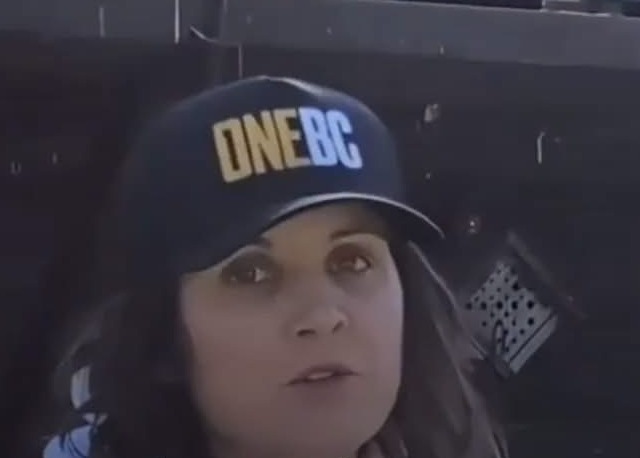
Tonight, from 6:15 to 8 p.m., British Columbians get the only live, televised leaders' debate of this provincial election. On stage will be the NDP's David Eby, interim Conservative leader Lorne Doerkson and Green leader Emily Lowan. Missing will be Dallas Brodie, the leader of OneBC and the sitting MLA for Vancouver-Quilchena.
That is wrong, and voters should say so.
OneBC is no fringe placeholder. According to Elections BC's official candidate list, the party is running 33 candidates across the province. Voters in those 33 ridings will see a OneBC name on their ballot on Oct. 24. Tonight, they won't hear from the leader of the party asking for their vote.
Polling shows the public is paying attention. Ipsos, polling for Global BC from Oct. 7 to 11, puts OneBC at 4 per cent of decided voters. Pallas Data, polling Oct. 10 to 11, has the party at 5 per cent province-wide and 13 per cent on Vancouver Island, where Pallas calls it OneBC's strongest region. Research Co., polling Oct. 9 to 11, has OneBC at 2 per cent of decided likely voters, but finds Brodie's personal approval at 26 per cent, up eight points, with 4 per cent naming her the best choice for premier.
Most tellingly, Research Co. found that 41 per cent of likely voters in British Columbia say the leaders of CentreBC and OneBC should be in tonight's debate.
So why aren't they?
The broadcasters can't give a public answer, because they haven't given one. The BC Broadcast Consortium includes CBC BC, CTV Vancouver, Global BC, Rogers Sports and Media (CityNews/OMNI) and CHEK News. Its Oct. 6 announcement said only that "all parties agreed upon the debate participation criteria, which these three participants met." When The Canadian Press asked for the criteria, the consortium did not provide them. Media reports since then have said OneBC and CentreBC were left out because neither had official party status in the legislature at dissolution. The consortium itself has not published that test or any other.
A secret rulebook is a poor fit for a public-interest broadcast that will air on nearly every major TV and radio network in the province, including the public broadcaster. If the deciding test is official party status in the legislature, voters deserve to see it in writing and to judge whether a rule about seating in the last legislature is the right way to decide who speaks to voters in this election. A party running 33 candidates, led by a sitting MLA and polling as high as 5 per cent province-wide and 13 per cent on Vancouver Island, has a reasonable claim to be heard.
None of this requires anyone to agree with Brodie. It only requires believing that voters, not a closed-door agreement among broadcasters, should decide which ideas are worth weighing. A debate is supposed to show voters their choices. Tonight it will show them only some of those choices.
The consortium should, at minimum, publish its criteria and explain how each of the five parties measured against them. Before the next election, it should adopt a public, objective standard that counts the candidates parties actually run and the support voters actually give them.
How to make your view known: The consortium's spokesperson is Shiral Tobin, director of journalism and programming at CBC British Columbia (shiral.tobin@cbc.ca). Complaints about CBC journalism can go to the CBC Ombudsman at ombud@cbc.ca or cbc.radio-canada.ca/en/ombudsman/contact. Complaints about private broadcasters such as CTV, Global, CityNews and CHEK can go to the Canadian Broadcast Standards Council at cbsc.ca/make-a-complaint.
This is an opinion piece by the News Desk.