Explore B.C. · Northern Rockies
Liard River Hot Springs: the long way north is part of the reward
A forest soak, a warm-water wetland and a stop worth building into an Alaska Highway journey. Here is what to know before following the Reel north.
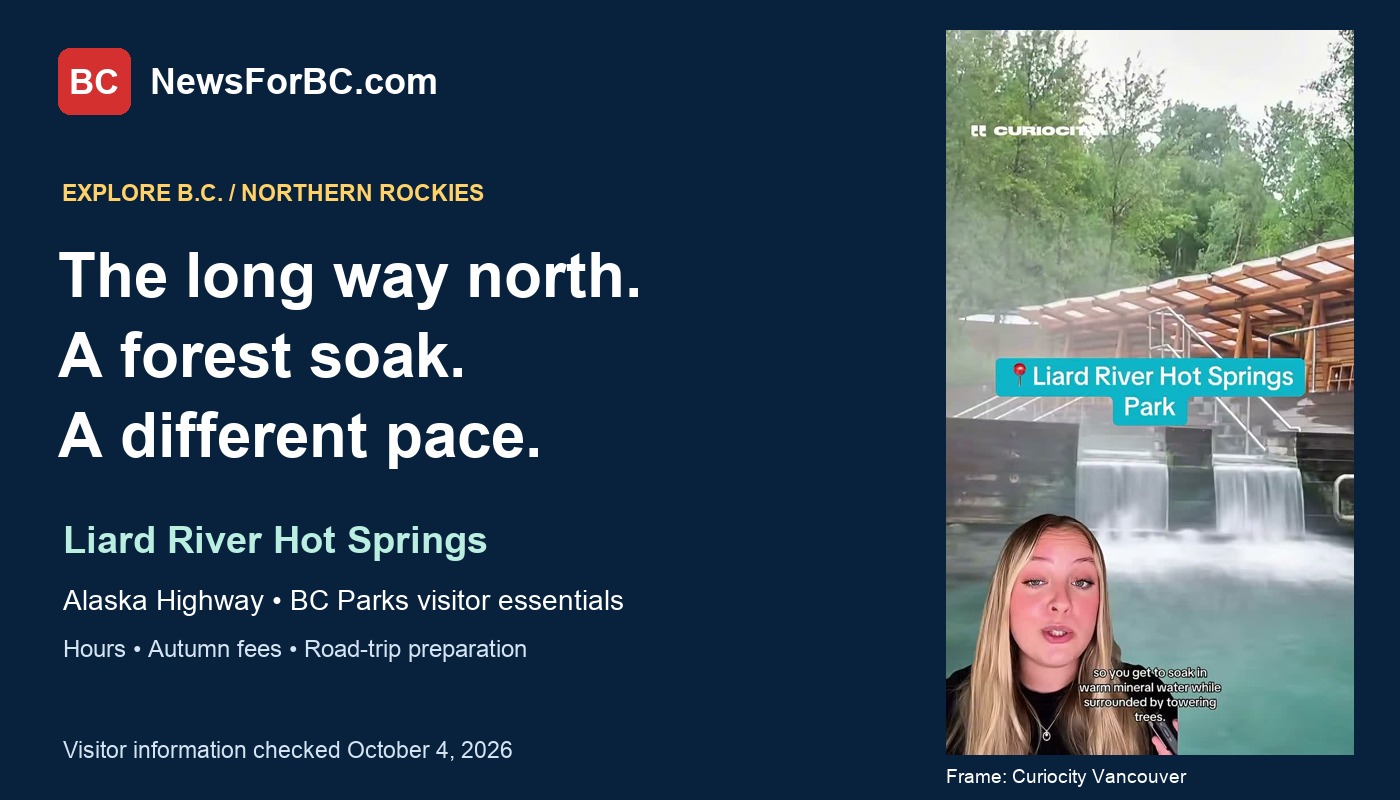
At Liard River Hot Springs, the walk to the water is part of the attraction. A boardwalk crosses a warm-water swamp and boreal forest before reaching Alpha Pool, where forest, steam and mineral water meet. The spring does more than offer travellers a place to stop: its warmth helps sustain an unusual pocket of plant and animal life in northern British Columbia.
A short Curiocity Vancouver video has put the destination back into the fall-trip conversation. The appeal is real. So is the distance. This is better approached as a carefully planned northern road journey—or a generous stop on an existing Alaska Highway itinerary—than as a quick escape from Vancouver.
The original travel prompt
Watch: a forest soak in the far north
This is the supplied Curiocity Vancouver Reel, captured in full and converted to a browser-friendly format. Its original presenter, captions and branding remain visible.
Watch the original on Facebook
Source: Curiocity Vancouver · posted September 30, 2026 · about 22 seconds. The post credits “olga🌟”. Filming dates are not independently verified.
Where it is—and what “near the Yukon” really means
BC Parks places Liard River Hot Springs Park at kilometre 765 of the Alaska Highway, approximately 60 kilometres north of Muncho Lake Park. Destination BC describes it as about 300 kilometres northwest of Fort Nelson. In other words, it is already a substantial northern drive before the final boardwalk stroll.
The Reel’s caption calls it “right by the B.C.-Yukon border” and quotes 20 hours and 46 minutes from Vancouver via BC-97 N. Treat that precise time as the publisher’s route estimate, not a promise or a current road assessment. “Near the Yukon” is useful regional shorthand, not a claim that the springs sit on the boundary: the lodge across the highway describes its location as 140 kilometres from the border.
Allow for overnight stops, meals, fuel, changing weather and wildlife on the road. Confirm accommodation and service availability rather than treating a route-planner time as the length of the whole trip. Use the official park map and location section to plan the stop.
The warm water is only half the story
BC Parks calls Liard the second-largest hot spring in Canada, supporting the Reel’s more cautious description of “one of Canada’s largest.” It lists Alpha Pool at 42°C to 52°C. That range describes very hot water, not a uniform or universally comfortable swimming temperature; choose your spot cautiously, supervise children closely and leave the water if you feel unwell. There are no lifeguards.
Unlike springs that flow straight into a river or creek, Liard feeds an intricate swamp system. BC Parks describes a microclimate supporting thermally influenced plants, including orchids, alongside the wider boreal plant community. Moose feed in the warm-water wetlands, and tiny lake chub can be seen in pools alongside the boardwalk. Wildlife sightings are a possibility, not a scheduled attraction.
That ecology is the reason to stay on the boardwalk, not merely a rule to read at the entrance. Do not step into the wetland for a photograph. Soap, shampoo and other cleaning products are prohibited in or near the hot spring.
A place with a history before the highway
The springs’ human story did not begin with road-trippers. Destination BC’s account identifies the wider Liard Corridor with Kaska Dena Traditional Territories and gives the name Tū Tīkōn, meaning “hot water.” BC Parks also recognizes Indigenous use long before later trading and highway-development histories; its own website cautions that the page does not yet fully represent Indigenous connections to the land.
For the modern visitor landscape, two dates are useful: BC Parks says American Army crews built the first boardwalk and pool facilities in 1942, during Alaska Highway construction, and that the provincial park was created in April 1957. The convenient stop travellers know today sits within a much older living landscape.
Hours, fees and the autumn changeover
The video’s year-round claim matches BC Parks’ published operating information. It does not mean unlimited access, identical winter services or guaranteed availability. The live official page listed the following when checked:
Pool and gate
Pool: 7 a.m.–10:30 p.m. daily; no admission after 10 p.m. Gate: 7 a.m.–11 p.m. Visitors must leave the pools by 10:30 to change before the gate closes.
Day-use admission
May 1 to Thanksgiving: $5 adult, $3 child or $10 family. Annual passes: $10 adult or $20 family. The day-use section says cash, credit and debit are accepted.
Camping
The campground is listed as operating year-round, with 2026 reservations May 1–October 12. Reserved and first-come, first-served sites are described; neither means a site is available tonight.
Winter services
BC Parks says winter camping has reduced services and campground taps are shut off in the off-season. The camping section separately says on-site camping fees are cash-only. Check arrangements before travelling.
An important October detail: the live BC Parks page says the day-use fee season runs to Thanksgiving—not simply to the end of September. Check the current page rather than relying on an older travel listing. Its camping date table still displays a previous winter season alongside current reservations, so confirm the coming winter’s arrangements through the park or booking service.
For camping availability and current charges, follow BC Parks’ reservation service. The listed park operator is Kootenay Forest Services Ltd., telephone 250-776-7000. If you prefer a room, the lodge across the highway is a separate business; check directly for openings and services. This article is not sponsored.
Pack for the road, not just the pool
- Winter-ready travel: B.C. warns that mountain highways can encounter winter weather starting in October. Obey posted winter-tire and chain requirements; check your exact route, forecast and vehicle equipment.
- Dry layers and essentials: pack a towel, warm clothing for the walk back, drinking water, an emergency kit and a plan for stops. A warm pool does not make a cold highway journey low-risk.
- Wildlife awareness: read the electric-fence advisory and follow local signs. Keep a respectful distance from animals and do not treat the fence as a guarantee against encounters.
- Respect the setting: stay on the boardwalk and designated routes, leave cleaning products out of the spring and follow the park’s pet rules. Bicycles, including e-bikes, are restricted to permitted road areas, not the boardwalk trail.
Is it worth going? For travellers who enjoy the northern journey as much as the destination, Liard offers something a city spa cannot: a soak connected to an entire warm-water ecosystem. The useful version of the Reel’s invitation is not “drive twenty hours for a dip.” It is “give this stretch of British Columbia enough time.”
Sources and reporting notes
Visitor information is a snapshot checked October 4, 2026, not a live conditions feed. NewsForBC reviewed the actual clip, caption, automatic transcript and sampled frames, then checked the park’s rendered page and advisory data. We did not verify the Reel’s filming date, measure water temperatures or independently time its Vancouver route.
- Curiocity Vancouver’s September 30 Facebook Reel — supplied video, narration and caption. Preserved caption.
- BC Parks: Liard River Hot Springs Park — location, hours, fees, camping, ecology, history and live advisory. Electric-fence safety PDF.
- Destination BC, Julia Crawford: Hot springs in The Great Wilderness — regional travel and Kaska Dena context. Current park information takes precedence over travel-guide access details.
- Liard Hot Springs Lodge & RV Park — attributed local location and accommodation context; not the authority for park rules.
- Province of B.C.: Winter Driving and DriveBC — preparation guidance and the place to check current road conditions.
Reporting source note · Claim-by-claim checks · Clip transcript