
Canada media · Copyright · Fair dealing · Source-check
CTV copyright claim against Northern Perspective turns fair-dealing fight into media-accountability story
NewsForBC source-checks a TikTok/YouTube claim that CTV/Bell targeted Northern Perspective over political commentary clips, then explains Canada’s fair-dealing rule, YouTube’s counter-notice process and what records still need release.
What the video says
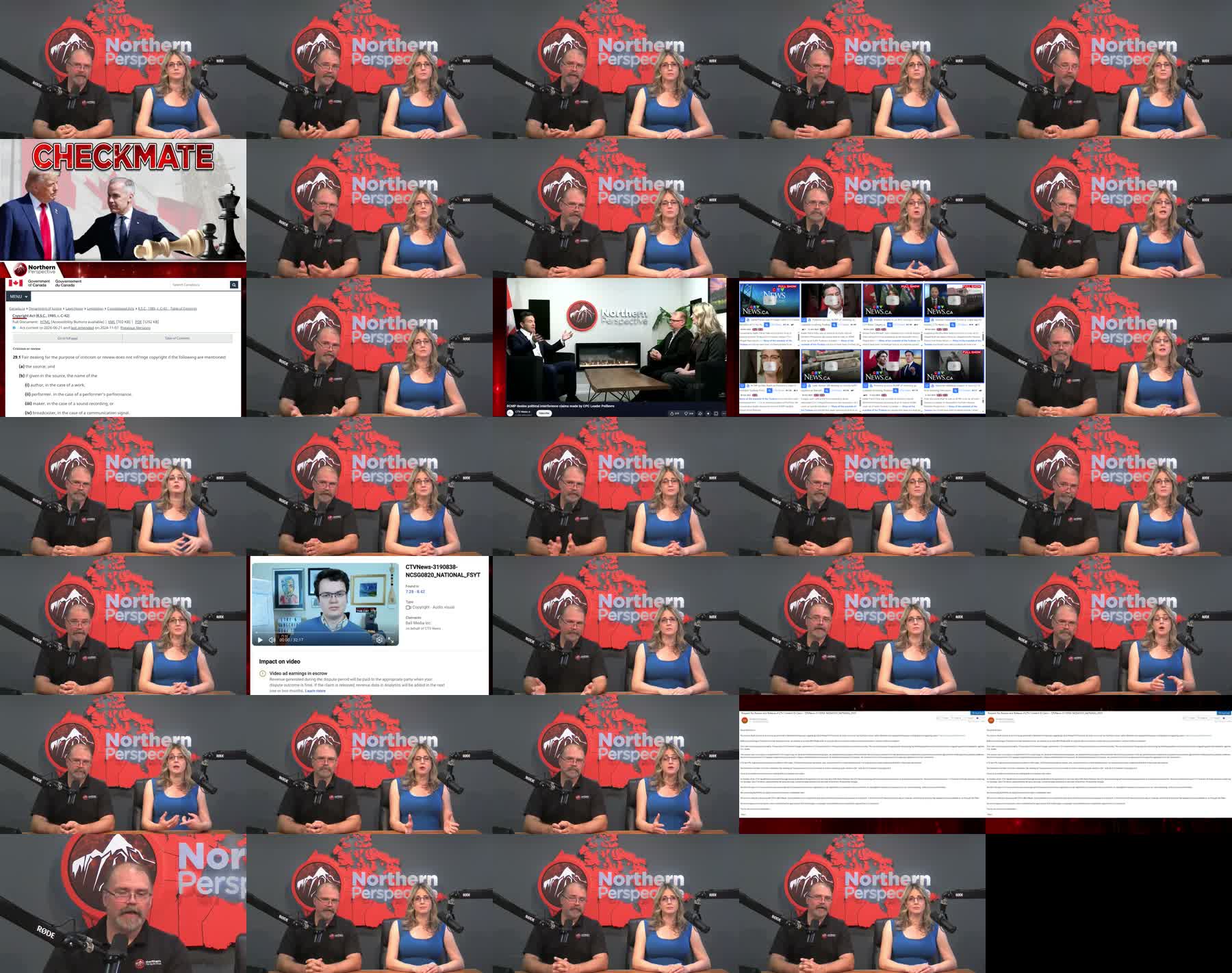
A TikTok repost by @mlschoenhals points to a Northern Perspective video titled “CTV News Targeting Independent Media, Court Action Imminent If They Don’t Back Down.” In the transcript, Northern Perspective says CTV/Bell filed a copyright claim over about 76 seconds of a CTV Vassy Kapelos clip used inside a roughly 17-minute political commentary video, from a CTV broadcast the speaker describes as about 23 minutes long.
The speaker argues the use was commentary and criticism, says the source/broadcaster was attributed, and says CTV has also used Northern Perspective clips in its own broadcasts. The video further says Northern Perspective appealed, Bell/CTV rejected the appeal, and a counter-notification path could force the claimant to show legal action if the dispute escalates.
Those are creator-side claims. They matter because the video shows a broader fight between broadcast newsrooms, independent commentators and platform copyright systems. But they are not the same as a court finding. NewsForBC did not retrieve CTV/Bell’s notice, the full appeal record, the original disputed video timeline or any court filing.
What Canadian law clearly says
Canada does not use the U.S. phrase “fair use” as its core statutory label. The Copyright Act uses fair dealing. Section 29 says fair dealing for research, private study, education, parody or satire does not infringe copyright. Section 29.1 says fair dealing for criticism or review does not infringe if the source is mentioned and, if given in the source, the author, performer, maker or broadcaster is mentioned. Section 29.2 gives a similar rule for news reporting.
That is important for political-commentary channels because the category exists. It does not mean every short clip is automatically lawful. Fair dealing still turns on facts: purpose, amount used, character of the dealing, alternatives, nature of the original work and effect on the market or work.
The CBC case matters — but it does not decide this dispute
The closest Canadian media-law context is Canadian Broadcasting Corporation v. Conservative Party of Canada, 2021 FC 425. Canadian Lawyer reported that the Federal Court found the Conservative Party’s use of CBC material overall supported a finding of fair dealing, and that the ruling interpreted criticism/fair dealing requirements broadly in a political context.
That supports why creators would cite Canadian fair dealing in a political-commentary dispute. It does not prove Northern Perspective wins here. A court would still need the actual clips, amount, attribution, purpose, market effect, context and any moral-rights or platform-contract issues.
What YouTube’s process says
YouTube’s Help pages say creators can submit a copyright counter-notification when they believe content was removed by mistake, including misidentification of content that may qualify for fair use, fair dealing or public domain. YouTube also says claimants generally have 10 U.S. business days to respond to a counter notification with required evidence of legal action; if they do not, the content may be reinstated.
That matches the general outline in the Northern Perspective video, but platform process is not a legal verdict. It is a procedural fork: stand down, maintain the claim through a legal process, or resolve the dispute privately.
Why this is a public-interest story
News organizations routinely quote, excerpt and frame other people’s words and footage. Independent commentators do the same. If large broadcasters use copyright tools too aggressively, the result can be a chilling effect on commentary and political criticism. If independent channels overuse broadcast footage without enough transformation or attribution, broadcasters have legitimate rights to protect. The public-interest line is not “big media bad” or “creators can copy anything.” It is whether the same fair-dealing standard is applied consistently.
Records wanted before stronger conclusions
- The actual Bell/CTV copyright claim notice and claimed timestamp range.
- The disputed Northern Perspective video and the exact CTV segment used.
- Any attribution shown in the video description, onscreen labels or spoken commentary.
- Northern Perspective’s appeal text and Bell/CTV’s rejection rationale.
- Any public response from CTV/Bell.
- Any filed lawsuit or court application, if the counter-notification path is used.
Claim table
| Point | Status |
|---|---|
| TikTok/YouTube says CTV/Bell targeted Northern Perspective over political-commentary clip use. | Verified as the claim; not independently verified as a complete legal record. |
| Canada has fair dealing for criticism/review and news reporting. | Confirmed in the Copyright Act. |
| Attribution to source/broadcaster matters. | Confirmed for criticism/review and news reporting under sections 29.1 and 29.2. |
| Northern Perspective automatically wins because the clip was short. | Not proven. Fair dealing is fact-specific. |
| A lawsuit has been filed. | Not found in this pass. |
Source package
Sources
- TikTok lead from @mlschoenhals / Mike Schoenhals — Captured by NewsForBC; public shortlink resolved to this canonical TikTok video.
- Northern Perspective YouTube video: CTV News Targeting Independent Media, Court Action Imminent If They Don’t Back Down — YouTube page/transcript mirrors the TikTok audio and supplies the detailed claim.
- Copyright Act, R.S.C. 1985, c. C-42, sections 29–29.2 — Official Government of Canada law text for fair dealing, criticism/review and news reporting attribution requirements.
- YouTube Help: Submit a copyright counter notification — Official YouTube counter-notification workflow and fair use/fair dealing reference.
- YouTube Help: Respond to a counter notification — Official YouTube statement that claimants generally have 10 U.S. business days to provide evidence of legal action.
- Canadian Lawyer: Federal Court liberally interprets certain Copyright Act requirements — Summary of CBC v. Conservative Party of Canada, 2021 FC 425 and fair-dealing commentary.
- Northern Perspective About page — Primary-source description of the channel’s political-commentary mission.

.jpg)