Wildfire source-check
B.C. wildfire arson claims: what is confirmed, what is not, and why wording matters
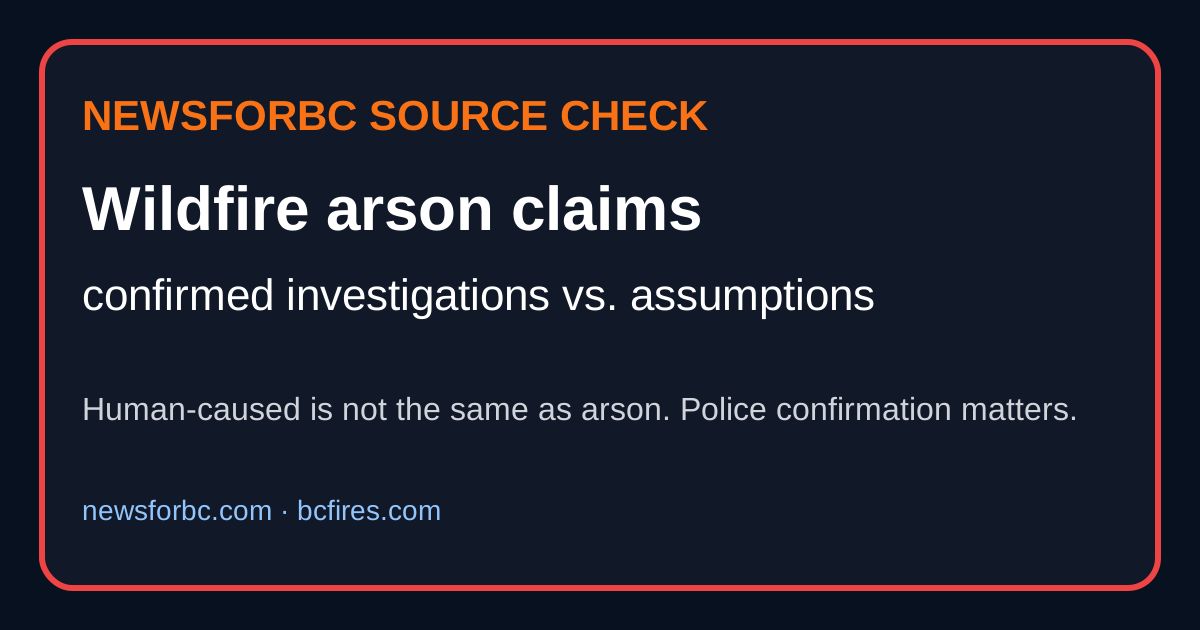
A Facebook link sent to NewsForBC appeared to point at a wildfire/arson discussion, but the post itself was not publicly visible when checked: Facebook redirected to a photo page and then displayed “content isn’t available right now.” That matters. Without the original text or image, the post cannot be quoted or treated as evidence.
The broader question is still newsworthy: several public reports this season have described police investigations into suspicious fires or alleged arson, while BC Wildfire Service is also warning about lightning holdovers, hot and dry conditions, smoke and the continuing need for public reports. The problem is that social media often collapses several different categories into one word — arson.
What is confirmed
- Police investigations have been reported. Public news feeds list reports from Global News/Canadian Press/CityNews about arson investigations being launched in B.C. fires, including Interior and Metro Vancouver angles.
- Specific suspicious-fire cases have been reported. Google News listed CBC reporting under the title “Man charged in connection to suspicious brush fires in Port Alberni,” and reports seeking witnesses/video in the Belcarra Regional Park wildfire investigation.
- BC Wildfire Service says current conditions remain dangerous. Its Aug. 8 dashboard update described hot and dry conditions across much of B.C., lingering smoke, possible holdover fires, and asked the public to report wildfires quickly.
- BCWS prevention guidance treats human activity as a serious prevention issue. The province’s prevention page says prevention is more than stopping new human-caused fires and emphasizes shared responsibility and FireSmart practices.
What is not confirmed
It is not confirmed that “arson” explains B.C.’s wildfire season, or even most major fires. A fire can be human-caused without being criminally set. Human-caused starts can include escaped campfires, burning, sparks from equipment, vehicles, fireworks, cigarettes, power infrastructure or other activity. Arson is a criminal allegation and should be used only where police, fire investigators or courts support that wording.
Likewise, a police investigation does not mean a person has been charged, and a charge does not mean guilt. NewsForBC will use “suspicious,” “under investigation,” “police say,” “charged,” and “convicted” as separate labels.
Why the distinction matters
Bad wording can mislead the public in two directions. If social media turns every human-caused fire into “arson,” people may miss practical prevention: obey fire bans, avoid high-risk activities in dry grass or forest interface areas, report smoke early, and reduce fuels around homes. But if officials and media avoid the arson angle entirely when police are actually investigating fires, the public may miss important calls for witnesses, video and tips.
What people should do
- If life or property is in immediate danger, call 911.
- To report a wildfire, call 1-800-663-5555 or *5555 on a cellphone, or use the BC Wildfire Service app/reporting tools.
- If you saw suspicious activity near a fire start, contact the local police agency or RCMP detachment and preserve photos, dashcam video, timestamps and location details.
- For evacuation orders, alerts and verified emergency updates, use EmergencyInfoBC and local government channels.
The NewsForBC read
The arson angle is real enough to investigate, but not broad enough to generalize. The careful story is this: B.C. has a wildfire-prevention problem, a climate/dry-fuel problem, a reporting/detection problem, and in some places, police are also investigating suspicious or allegedly deliberate fires. Those are related issues, but they are not the same issue.
Source note: Read the source note. BCFires has a practical public-safety version of this update at bcfires.com.